Fine lines lost in a T-shirt print? What to check on the proof
Compare fabric texture, line spacing, and ink opacity on an actual print.
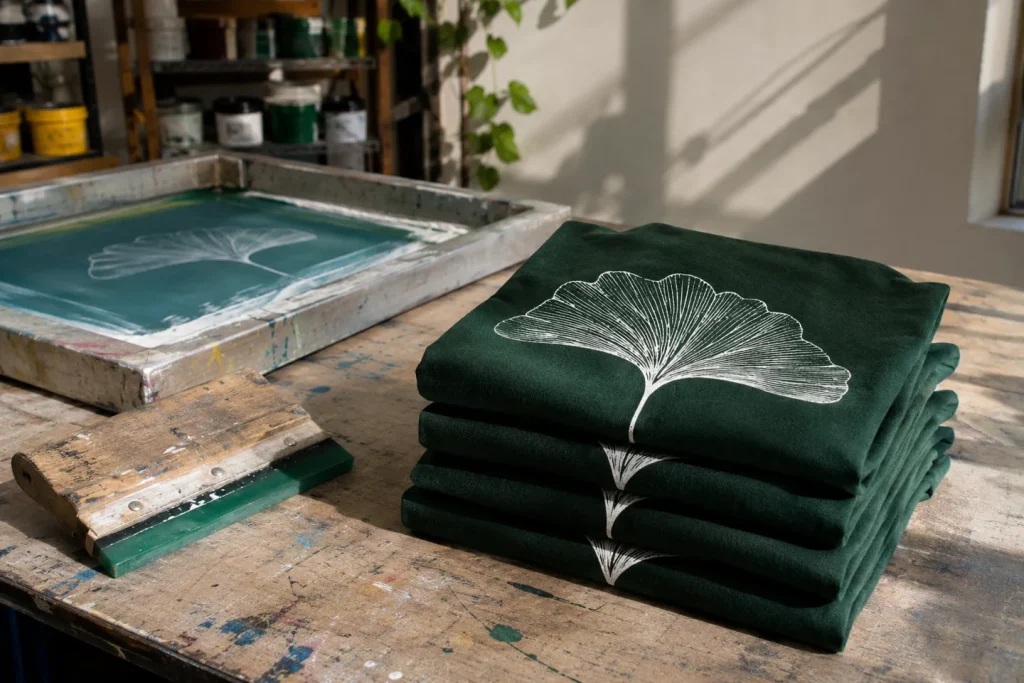
A line that appears razor-sharp on a digital screen may become too thin or break apart when printed on a cotton T-shirt. Conversely, two separate lines might merge if the ink spreads. Therefore, the most valuable test for a T-shirt graphic is a small-scale line test performed on the actual fabric intended for production.
Test three different line thicknesses on a single screen.
Select a small section—a few centimeters—of your design. Create three side-by-side versions, varying both the line thickness and the spacing between the lines. Inform the printer about the fabric color, the target dimensions, and the type of ink to be used. If a white underbase is required for a dark-colored fabric, ensure the test includes these same layers.
Examine the sample closely, and then view it from a distance with the T-shirt hanging on a hanger. If only one internal gap within the design closes up during printing, adjust that specific area rather than thickening the entire logo. If the appearance after washing is a concern, wash and dry a sample according to the manufacturer’s care instructions, then compare it side-by-side with the original proof.