How to lay out a bilingual restaurant menu in Northern Cyprus
When combining Turkish and English names on the same menu, test the line length, the price column, and the flow of the ordering process.
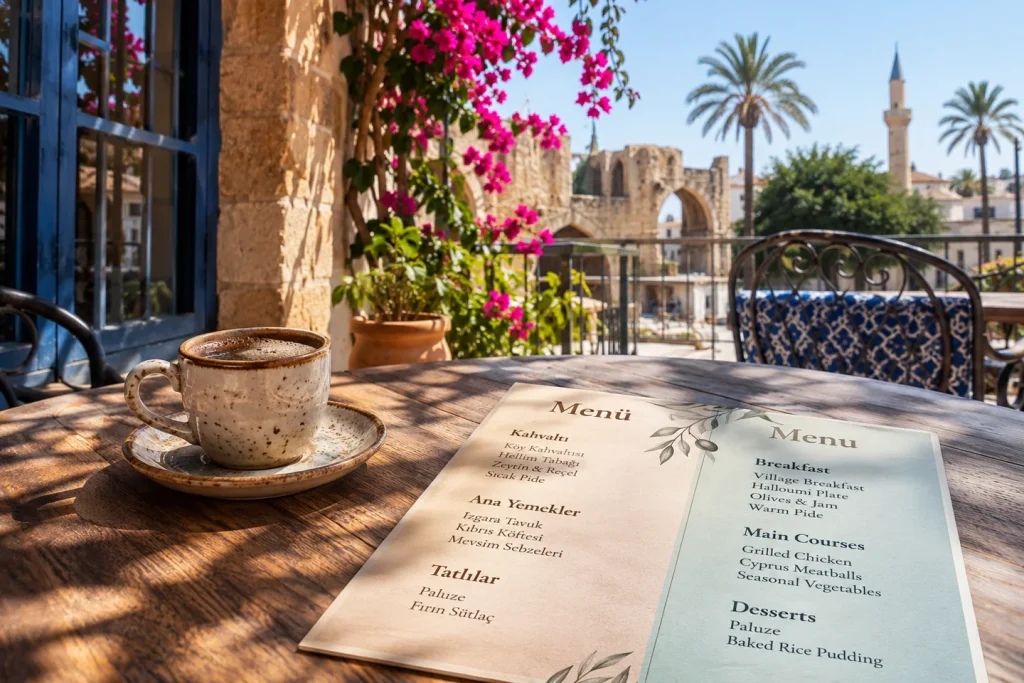
It is easy to set the Turkish dish name in bold and its English equivalent in a lighter weight. The real problem arises when a single-line heading expands into three lines upon translation. If the price on the right ends up appearing closer to the dish below it, the customer is forced to re-read the menu to figure out which price belongs to which dish.
Lay out the longest dish name first.
When preparing a sample page for a bilingual restaurant in Northern Cyprus, test the longest name, the longest description, and the highest price on the same page. Group the dish name and its translation as a single block, and align the price with the start of that block. Check whether the lighter-weight text in the second language remains legible under evening lighting.
You can set three tasks for your proofing process: find an appetizer, state its price, and read its ingredients in English. If someone seeing the menu for the first time can follow along with their finger on the same line for all three tasks, then the layout is working effectively. As for allergen or ingredient information, have the kitchen team verify it against their own recipes before the menu goes to print.